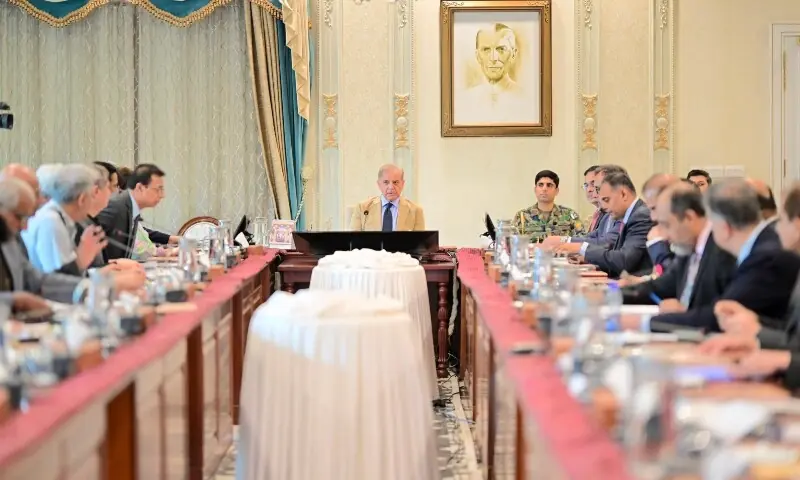
ISLAMABAD: The Senate Standing Committee on Privatisation has strongly criticised the Power Division for failing to address key bottlenecks hindering the privatisation of major government-owned power plants. The frustration was voiced during a meeting chaired by Senator Afnan Ullah Khan, who noted that the Division had made “minimal progress” in shifting away from the outdated single-buyer model.
Senator Afnan questioned how the sale of power plants could be tied to assured gas supply when reserves are already depleting. He pressed officials for clarity, particularly on the long-pending case of the Nandipur Power Plant.
Joint Secretary Power Division Ghulam Rasool informed the Committee that the principal obstacle remains the absence of a dedicated gas sales-purchase agreement between the power plants and suppliers. Currently, gas is supplied on an “as-and-when-available” basis—an arrangement linked with the Petroleum Division and one that complicates the privatisation framework.
He noted that the Power Division’s responsibility is to meet the Conditions Precedent set by the Privatisation Commission and execute Cabinet decisions. Gas supply issues, he added, fall under the mandate of the Petroleum Division. Ongoing discussions among the Petroleum Division, NEPRA, ISMO, and other stakeholders are expected to lead to a Cabinet-level policy decision. Several meetings chaired by the Petroleum Minister have already been held, with proposals forwarded to the Prime Minister’s Office.
The Petroleum Division’s recommendations for future buyers include splitting the privatisation process into pre- and post-sale phases, maintaining the current gas-supply arrangement until ownership transfer, and requiring new buyers to procure gas under existing government import policies—an approach that has raised concerns about the overall purpose of privatisation.
On the status of the two major GENCOs, Nandipur and Guddu, the committee was informed that eight out of nine prior actions for Nandipur have been completed, with one still pending. For Guddu, five of nine actions have been finalised, while gas-supply risks, loan settlements, land transfer issues, and other challenges remain unresolved. Although Guddu receives gas from the dedicated Kandh Kot fields, declining reserves pose an ongoing threat.
The Committee acknowledged the progress made by both the Power and Privatisation Divisions but reiterated that the single-buyer model is unattractive to investors. Relevant ministries were instructed to propose workable alternatives. The Secretary Privatisation confirmed that a detailed CTDC plan, prepared with NEPRA, is ready for presentation.
The Committee also reviewed progress on the privatisation of IESCO, FESCO, and GEPCO—three profitable DISCOs in the first batch. Financial Advisor reports have been circulated for review among all relevant stakeholders.
For the next meeting, the Committee recommended inviting senior officials from NEPRA, the Petroleum Division, and ISMO to further deliberate on GENCO-related challenges.
Story by Mushtaq Ghumman